
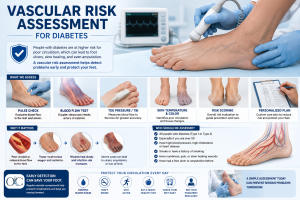
Diabetes can affect the blood vessels that supply the legs and feet. When circulation is reduced, even a small cut, blister, sore, or pressure area may heal slowly or become more serious.
A vascular risk assessment helps identify circulation concerns before they lead to wounds, infection, tissue damage, or more serious diabetic foot complications.
At Orange County Foot & Ankle Institute, Dr. Amir Lebaschi, DPM evaluates diabetic foot circulation, skin changes, wounds, pressure areas, and other warning signs that may increase vascular risk.
Why Vascular Risk Matters in Diabetes
The feet need steady blood flow to stay healthy. Blood carries oxygen, nutrients, and immune support to the skin and soft tissue.
When blood flow is reduced, the body may struggle to heal. A small wound can stay open longer, and infection may become harder to fight.
Diabetes can damage nerves and reduce blood flow. These problems can increase the risk of foot ulcers and infection in people with diabetes.
What Is a Vascular Risk Assessment?
A vascular risk assessment checks for signs that blood flow to the feet may be reduced. It helps determine whether a patient may need closer monitoring, protective care, wound prevention, or referral for additional vascular testing.
During an evaluation, a podiatrist may assess:
- Skin color and temperature
- Foot and ankle swelling
- Pulses in the feet
- Capillary refill
- Hair growth changes on the feet or toes
- Skin texture and thickness
- Slow-healing wounds
- Pain with walking
- Numbness or neuropathy symptoms
- Pressure areas, calluses, or ulcers
- Signs of infection or tissue damage
The goal is to identify risk early, before a small problem becomes a serious foot wound.
Signs of Poor Circulation in the Feet
Poor circulation may not always cause obvious symptoms at first. Some patients may notice changes slowly over time.
Warning signs can include:
- Cold feet or toes
- Pale, blue, purple, or dark skin changes
- Foot pain with walking
- Slow-healing cuts or sores
- Cramping in the legs that improves with rest
- Thin or shiny skin
- Weak or absent foot pulses
- Loss of hair on the toes or feet
- Thickened toenails
- Wounds that keep reopening
Poor circulation can make the foot less able to fight infection and heal. Many people with diabetes may also have peripheral artery disease, which reduces blood flow to the feet.
Why Wounds Become More Dangerous
A diabetic foot wound is more concerning when blood flow is reduced. The tissue may not receive enough oxygen and nutrients to repair itself.
Poor circulation can also make infection harder to control. When healing is delayed, the wound may deepen, spread, or become more complex.
This is why diabetic patients should not wait to seek care for a wound, blister, ulcer, color change, or skin breakdown.
Diabetes, Neuropathy, and Circulation
Vascular risk often becomes more serious when poor circulation happens together with neuropathy.
Neuropathy can reduce feeling in the feet. A patient may not feel a cut, blister, pressure sore, or shoe injury. If circulation is also reduced, that unnoticed injury may heal slowly or become infected.
Diabetes can affect both nerves and circulation, which can increase the risk of serious foot complications.
When Additional Testing May Be Needed
If circulation appears reduced, additional testing may be recommended. This may include noninvasive vascular studies or referral to a vascular specialist.
Testing may help evaluate how well blood is reaching the legs and feet. This is especially important when a patient has a non-healing wound, foot ulcer, rest pain, skin color changes, or signs of tissue damage.
A podiatrist can help determine whether symptoms suggest a need for further vascular evaluation.
Who Should Consider a Vascular Risk Assessment?
A vascular risk assessment may be especially important for patients with diabetes who have:
- A foot wound that is not healing
- A history of diabetic foot ulcers
- Numbness or neuropathy
- Cold feet or toes
- Skin color changes
- Pain or cramping with walking
- Swelling or skin changes
- thick calluses or pressure points
- Kidney disease
- High blood pressure or cholesterol
- Previous foot infection
- Previous amputation or severe wound history
Patients with diabetes and vascular disease may have a higher risk of severe foot complications, so early evaluation is important.
When to See a Podiatrist
Schedule an evaluation if you have diabetes and notice:
- A wound that is not getting smaller
- Redness, swelling, warmth, drainage, or odor
- Skin that becomes pale, blue, purple, dark, or black
- Cold toes or feet
- Pain with walking or pain at rest
- Numbness, tingling, or burning
- A callus with discoloration underneath
- A blister, sore, or ulcer
Do not wait for severe pain. Diabetic neuropathy can reduce pain sensation, even when a serious problem is developing.
The Bottom Line
A vascular risk assessment for diabetes helps identify poor circulation and related foot risks early. This is important because reduced blood flow can slow healing, increase infection risk, and make wounds harder to manage.
At Orange County Foot & Ankle Institute, Dr. Amir Lebaschi, DPM evaluates diabetic foot circulation, wounds, skin changes, neuropathy symptoms, and pressure areas to help protect the feet. Early evaluation can help reduce complications and support better long-term foot health.