
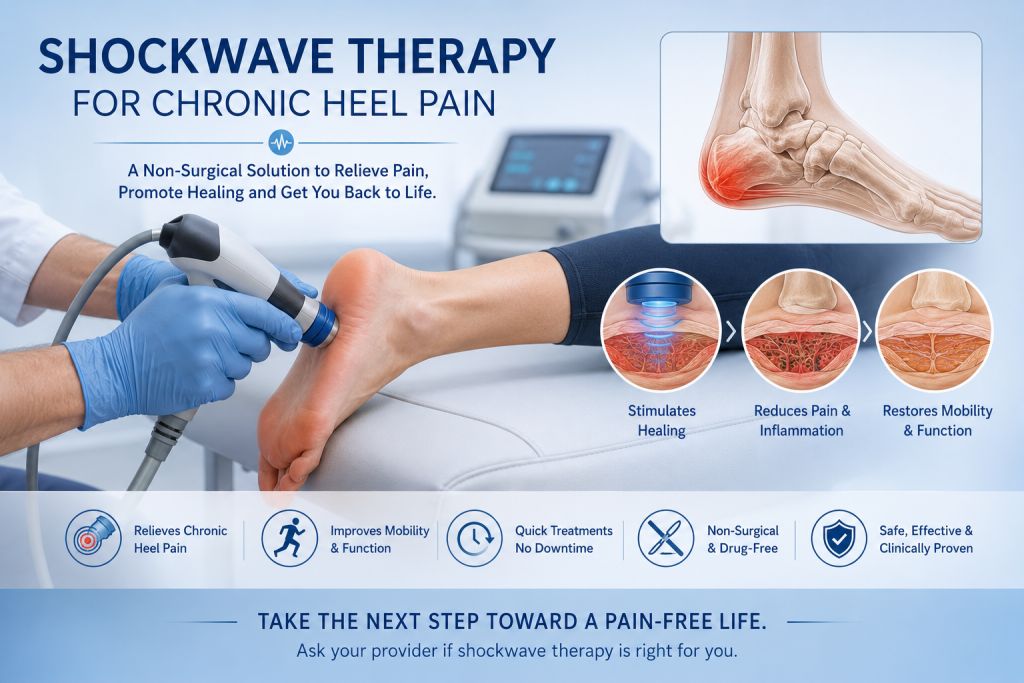
Chronic heel pain can make walking, exercise, work, and daily routines difficult. For many patients, the pain comes from plantar fasciitis, a condition involving irritation of the plantar fascia, the thick band of tissue that runs along the bottom of the foot from the heel to the toes.
When heel pain continues for months despite rest, stretching, supportive shoes, or other conservative care, extracorporeal shockwave therapy, often called ESWT, may be considered as a noninvasive treatment option.
At Orange County Foot & Ankle Institute, Dr. Amir Lebaschi, DPM evaluates chronic heel pain carefully to determine whether shockwave therapy may be appropriate based on the cause of pain, symptoms, foot mechanics, and response to other treatment.
What Is Shockwave Therapy?
Shockwave therapy is a noninvasive treatment that uses sound-wave energy delivered through the skin to the painful area. It does not involve surgery or an incision.
For chronic plantar fasciitis, treatment directs energy toward the irritated plantar fascia tissue. The goal is to stimulate the body’s healing response and reduce pain over time.
Despite the name, shockwave therapy does not use electrical shocks. It uses acoustic pressure waves.
How It May Help Chronic Heel Pain
Shockwave therapy may help chronic heel pain in several ways. It may stimulate biological activity in injured tissue, support tissue remodeling, and help reduce pain around the affected area.
For some patients, less heel discomfort can make walking, standing, and daily activities easier. Results vary based on the underlying diagnosis, the severity of the condition, the type of shockwave therapy used, and individual patient factors.
Who May Benefit From Shockwave Therapy?
Shockwave therapy is often considered for patients with chronic heel pain that has not improved with standard conservative care.
Patients may have already tried supportive footwear, stretching exercises, activity modification, ice therapy, custom orthotics, night splints, physical therapy, or anti-inflammatory treatment when appropriate.
Not every patient with heel pain needs shockwave therapy. Heel pain can also result from Achilles tendinitis, nerve irritation, arthritis, stress injuries, heel pad problems, or other conditions. A proper evaluation helps identify the actual cause.
What Happens During Treatment?
During treatment, a provider applies gel to the heel area and places the shockwave device against the skin. The device sends controlled acoustic waves into the painful tissue.
Some patients feel pressure, tapping, or temporary discomfort during treatment. The experience can vary based on treatment intensity and heel sensitivity.
Treatment plans may involve more than one session. The number of sessions depends on the device used, the severity of the condition, and the treatment plan recommended by the provider.
Is Shockwave Therapy a Replacement for Other Care?
Shockwave therapy is usually part of a larger treatment plan, not a replacement for everything else.
For many patients, the best results come from combining treatment with stretching, supportive shoes, improved foot mechanics, activity changes, and pressure reduction. Continuing to wear unsupportive footwear or ignoring tight calf muscles may allow heel pain to return.
The goal is not only to reduce pain, but also to address the mechanical stress that contributed to the heel problem.
Possible Side Effects and Considerations
Shockwave therapy is noninvasive and is often well tolerated. Some patients may have temporary soreness, redness, bruising, or discomfort in the treatment area.
A podiatrist should review your health history before treatment. Shockwave therapy may not be appropriate for every patient, especially when there is an active infection, certain circulation concerns, or another condition causing the heel pain.
When to See a Podiatrist for Heel Pain
- Lasts more than a few weeks
- Keeps coming back
- Is worse with the first steps in the morning
- Makes walking or standing difficult
- Does not improve with rest or shoe changes
- Occurs with swelling, redness, numbness, or injury
- Affects work, exercise, or daily comfort
The Bottom Line
Shockwave therapy may help some patients with chronic heel pain, especially when plantar fasciitis has not improved with basic treatment. It is noninvasive and may support pain relief and tissue healing without surgery.
At Orange County Foot & Ankle Institute, Dr. Amir Lebaschi, DPM can evaluate the cause of persistent heel pain and determine whether shockwave therapy, custom orthotics, stretching, physical therapy, or another treatment plan may be most appropriate.