
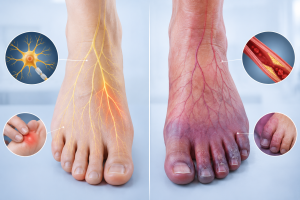
Diabetic neuropathy and poor circulation are two common reasons diabetic foot problems develop. They are related, but they are not the same condition.
Diabetic neuropathy affects the nerves. Poor circulation affects the blood flow. When either problem is present, the feet become more vulnerable to wounds, infections, slow healing, and other complications. When both happen together, the risk becomes even higher.
At Orange County Foot & Ankle Institute, Dr. Amir Lebaschi, DPM wants patients to understand the difference because the right treatment depends on identifying what is actually affecting the foot.
What Is Diabetic Neuropathy?
Diabetic neuropathy is nerve damage caused by diabetes. It often affects the legs and feet first. Patients may feel numbness, tingling, burning, sharp pain, weakness, or unusual sensitivity in the feet. In some cases, patients lose protective sensation and may not feel pain from a cut, blister, burn, or pressure sore.
This is dangerous because pain is one of the body’s warning signals. If a patient cannot feel an injury, the problem may continue to worsen without being noticed.
A small blister, callus, or ingrown toenail can become more serious when the patient keeps walking on it without realizing there is damage.
What Is Poor Circulation?
Poor circulation means the feet are not receiving enough healthy blood flow. Blood carries oxygen, nutrients, and immune support to the skin and tissues. When blood flow is reduced, the body may struggle to repair cuts, sores, and wounds.
In diabetes, poor circulation may be related to blood vessel disease or peripheral artery disease. Peripheral artery disease happens when narrowed arteries reduce blood flow to the arms or legs, most commonly the legs.
Poor circulation can make wounds heal slowly. It can also increase the risk of infection and tissue damage.
The Main Difference
The main difference is simple:
Diabetic neuropathy affects feeling. Poor circulation affects healing
Neuropathy can make it harder to notice a wound. Poor circulation can make it harder for that wound to close.
A patient with neuropathy may step on something sharp and not feel it. A patient with poor circulation may notice that a sore is taking a long time to heal.
Many diabetic patients can have both problems at the same time. Diabetes can reduce blood flow and damage nerves, making wounds more likely to become infected and harder to heal.
Signs of Diabetic Neuropathy
- Numbness in the feet
- Tingling or pins-and-needles feeling
- Burning pain
- Sharp or shooting pain
- Loss of feeling
- Increased sensitivity to touch
- Weakness or balance problems
- Not noticing cuts, blisters, or sores
A patient may still have neuropathy even if there is no severe pain. Some patients mainly feel numbness instead of discomfort.
Signs of Poor Circulation
- Cold feet or toes
- Slow-healing wounds
- Leg or foot pain with walking
- Cramping that improves with rest
- Skin color changes
- Shiny or thin-looking skin
- Weak pulses in the feet
- Toenail or hair growth changes
- Wounds that keep reopening
Poor circulation can be harder to recognize at first. A foot may not hurt all the time, but healing may be delayed when an injury occurs.
Why Both Problems Are Dangerous Together
Neuropathy and poor circulation can create a serious cycle.
First, nerve damage may prevent the patient from feeling pressure, rubbing, or injury. Then poor blood flow may prevent the wound from healing normally. If infection develops, the body may have a harder time fighting it.
This is why diabetic foot wounds can become serious quickly. A wound may start small, but it can worsen when sensation, circulation, and healing are all affected.
When to See a Podiatrist
- Numbness, burning, or tingling
- Cold feet or toes
- A wound that is not healing
- A blister, cut, callus, or sore
- Redness, swelling, warmth, or drainage
- Skin color changes
- Pain when walking
- A foot that looks or feels different
- Thick calluses or pressure spots
- Ingrown or infected toenails
The Bottom Line
Diabetic neuropathy and poor circulation are different problems, but both can increase the risk of diabetic foot complications.
Neuropathy affects the nerves and can reduce feeling in the feet. Poor circulation affects blood flow and can slow healing. When both are present, even a small injury can become more serious.
At Orange County Foot & Ankle Institute, Dr. Amir Lebaschi, DPM evaluates diabetic foot problems carefully to check for nerve damage, circulation concerns, pressure areas, wounds, and infection risks. Early care can help protect the feet, reduce complications, and support better long-term foot health.