
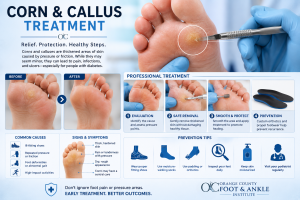
Corns and calluses are thickened areas of skin that develop from repeated pressure or friction. A callus usually forms on the bottom of the foot, especially under the ball of the foot or heel. A corn is smaller and more focused, often appearing on the tops, sides, or between the toes.
Although they may seem minor, corns and calluses can cause pain, change the way you walk, and create pressure points that may worsen over time. For patients with diabetes, numbness, poor circulation, or a history of foot wounds, they should be evaluated carefully.
At Orange County Foot & Ankle Institute, Dr. Amir Lebaschi, DPM provides professional corn and callus treatment to relieve pressure, protect the skin, and help prevent more serious foot problems.
What Causes Corns and Calluses?
Corns and calluses develop when the skin reacts to repeated rubbing or pressure. The body creates thicker skin as a protective response.
Common causes include:
- Tight or narrow shoes
- High heels or shoes with poor support
- Long periods of standing or walking
- Foot deformities such as bunions or hammertoes
- Flat feet or high arches
- Abnormal foot mechanics
- Repeated pressure under the ball of the foot
- Toe rubbing or overlapping toes
- Worn-out shoes or thin insoles
Corns and calluses often come back if the source of pressure is not corrected.
What Is the Difference Between a Corn and a Callus?
A callus is usually broad and flat. It commonly develops on weight-bearing areas such as the heel, ball of the foot, or side of the big toe
A corn is smaller and more concentrated. It may have a hard center and can become painful when shoes press directly against it. Corns often form on the tops of toes, between toes, or over toe joints.
Both can become painful when pressure continues.
Why Corns and Calluses Can Be Serious for Diabetic Patients
For people with diabetes, a corn or callus may be more than thick skin. Diabetes can damage nerves and blood vessels in the feet. Nerve damage can reduce feeling, while poor circulation can slow healing.
This means a patient may not feel pressure, rubbing, or skin breakdown until the area becomes more serious. A thick callus can sometimes hide irritation or tissue damage underneath.
People with diabetes should check their feet daily for changes such as cuts, blisters, corns, calluses, redness, swelling, and sores. They should avoid removing corns or calluses at home because selftreatment may damage the skin.
Why You Should Not Cut Corns or Calluses at Home
Trying to shave, cut, or dig into thickened skin at home can create a wound. This is especially risky for patients with diabetes, neuropathy, poor circulation, or reduced sensation.
Many over-the-counter corn removers contain medicated acids. These products can burn healthy skin and may lead to wounds or ulcers when used incorrectly.
Harsh chemical treatments can do more harm than good for people with diabetes because they may cause burns or foot ulcers.
How Professional Corn and Callus Treatment Helps
Professional treatment focuses on both the thickened skin and the pressure that caused it.
During an evaluation, Dr. Amir Lebaschi, DPM may assess the location of the corn or callus, shoe fit, foot shape, walking pattern, pressure points, circulation, sensation, and any signs of skin breakdown.
Treatment may include:
- Careful reduction of thickened skin
- Padding to protect painful areas
- Shoe recommendations
- Custom orthotics to redistribute pressure
- Toe spacers or protective devices
- Treatment for bunions, hammertoes, or other deformities
- Diabetic shoes or inserts when appropriate
- Wound care if skin breakdown has started
A podiatrist can safely reduce thickened dead skin in the office and help determine why the problem keeps returning.
Warning Signs That Need Prompt Evaluation
Schedule an appointment if you notice:
- Painful or recurring corns or calluses
- Redness, swelling, warmth, or tenderness
- Cracking, bleeding, drainage, or odor
- Dark or discolored skin
- A sore under or near a callus
- Difficulty walking because of pressure or pain
- Numbness, tingling, or burning in the feet
- Diabetes, poor circulation, or a history of foot ulcers
For patients with diabetes, an infected corn, blister, ulcer, color change, numbness, or foot wound should be checked promptly.
How to Help Prevent Corns and Calluses
You can reduce the risk of corns and calluses by wearing well-fitting shoes with enough room for the toes. Avoid shoes that squeeze, rub, or place too much pressure on one part of the foot.
Replace worn-out shoes and inspect them for rough seams or damaged insoles. Supportive footwear, cushioning, and orthotics may help reduce pressure in high-risk areas.
If you have diabetes, inspect your feet daily and do not try to remove corns or calluses yourself. Professional foot care is safer.
The Bottom Line
Corns and calluses are common, but recurring or painful pressure areas should not be ignored. They often signal that shoes, foot mechanics, or a structural issue are placing too much stress on the skin.
At Orange County Foot & Ankle Institute, Dr. Amir Lebaschi, DPM provides safe corn and callus treatment to reduce pressure, relieve discomfort, and help prevent wounds. If you have a painful callus, recurring corn, numbness, diabetes, or any sign of skin breakdown, early podiatric care can help protect your feet