
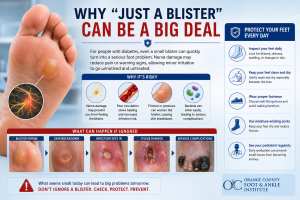
A blister may seem like a small problem, especially when it starts from new shoes, friction, walking, or exercise. For many people, a blister heals without causing serious trouble.
However, for patients with diabetes, numbness, poor circulation, or a history of foot wounds, a blister can become much more serious. A small area of broken skin can create an opening for infection and may develop into a wound if it is not protected properly.
At Orange County Foot & Ankle Institute, Dr. Amir Lebaschi, DPM encourages patients to take any new blister seriously, especially when it appears on the foot.
What Causes Foot Blisters?
Blisters form when friction, pressure, heat, or moisture irritates the skin. They commonly develop when shoes rub against the heel, toes, sides of the foot, or other pressure points.
Common causes include:
- New or poorly fitting shoes
- Tight socks or rough shoe seams
- Long periods of walking or standing
- Excess moisture from sweat
- Foot deformities such as bunions or hammertoes
- Repeated rubbing over calluses or pressure areas
A blister may contain clear fluid, blood, or irritated skin. Even when it looks small, the skin underneath may already be vulnerable.
Why Blisters Can Be More Dangerous in Diabetes
Diabetes can damage nerves and reduce blood flow to the feet. Nerve damage, also called diabetic neuropathy, may make it harder to feel pain, pressure, heat, or injury.
Because of this, a patient may continue walking on a blister without realizing that the skin is breaking down. Reduced blood flow can also make the area slower to heal and more likely to become infected.
Diabetes can damage nerves and reduce blood flow, making foot wounds harder to heal and more likely to become infected.
A Blister Can Turn Into an Open Wound
When the skin over a blister breaks, bacteria can enter the area. Continued pressure from walking or shoes can then keep reopening the skin.
For a patient with diabetes, this can create a pathway toward a foot ulcer or infection. The risk may be higher when the blister is on the bottom of the foot, near the toes, or over a bony pressure point.
Daily foot checks are important. Look for sores, cuts, blisters, corns, or redness and report new problems promptly.
Do Not Pop a Blister at Home
It may be tempting to pop or peel a blister, but this can increase the risk of infection. The skin over the blister can act as a natural protective cover while the area heals.
Do not cut, puncture, or aggressively remove the skin at home. Avoid placing harsh chemicals, medicated corn removers, or adhesive products directly on the blister unless a healthcare professional recommends them.
Keep the area clean, dry, and protected from additional friction. More importantly, reduce pressure from shoes and walking when possible
Warning Signs That Need Prompt Attention
A blister should be checked promptly if you notice:
- Redness, warmth, or swelling
- Drainage, pus, or odor
- Increasing pain or tenderness
- Dark, purple, blue, or black skin changes
- A blister that opens or keeps reopening
- A blister that is not improving
- Fever or feeling unwell
- Diabetes, numbness, or poor circulation
People with diabetes should seek care when a wound, sore, blister, or ulcer does not appear to be healing.
How to Help Prevent Foot Blisters
Preventing blisters starts with reducing friction and pressure. Wear well-fitting shoes with enough room for the toes. Choose clean, dry socks that help control moisture and do not create tight pressure bands.
Check inside your shoes before putting them on. Small objects, rough seams, or folded insoles can irritate the skin. Break in new shoes gradually rather than wearing them for long periods right away.
Daily foot checks are especially important for people with diabetes. Look for redness, rubbing, blisters, cracks, calluses, or skin color changes before they become more serious.
When to See a Podiatrist
You should schedule an evaluation if you have diabetes and develop a blister, especially if you also have numbness, poor circulation, a history of ulcers, or trouble healing.
A podiatrist can examine the area, check for infection or pressure problems, and help protect the skin before the blister turns into a larger wound.
The Bottom Line
A blister may seem small, but it should not be ignored when diabetes, nerve damage, poor circulation, or repeated pressure is involved.
At Orange County Foot & Ankle Institute, Dr. Amir Lebaschi, DPM evaluates blisters, skin breakdown, pressure points, and diabetic foot concerns to help prevent more serious complications. Early care can protect the skin, reduce infection risk, and help keep a small problem from becoming a larger one.