
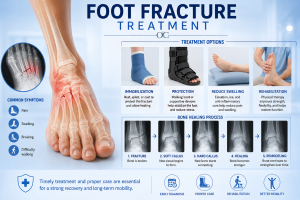
A foot fracture is a break in one of the bones of the foot. It can happen after a fall, twist, direct injury, sports accident, or repeated stress over time. Some fractures cause sudden pain and swelling. Others may feel like a sprain or deep ache that gets worse with walking.
Foot fracture treatment depends on the location of the break, the severity of the injury, bone alignment, swelling, activity level, and overall health. Some fractures heal with protection and immobilization. Others may need surgery to keep the bone in the correct position.
At Orange County Foot & Ankle Institute, Dr. Amir Lebaschi, DPM evaluates foot fractures carefully to determine the safest treatment plan and help patients heal properly.
Common Signs of a Foot Fracture
A foot fracture may cause:
- Pain after an injury
- Swelling or bruising
- Tenderness over a specific bone
- Difficulty walking or bearing weight
- Pain that worsens with activity
- Redness or warmth
- A visible change in foot shape
- Numbness, coldness, or color changes in severe cases
A fracture can sometimes be mistaken for a sprain. Mayo Clinic notes that a broken foot can cause pain, swelling, bruising, tenderness, and difficulty walking. Treatment depends on where the bone is broken and how serious the injury is.
Why Proper Diagnosis Matters
Foot fractures are not all the same. A toe fracture, metatarsal fracture, heel bone fracture, and midfoot fracture may each need a different treatment approach.
A podiatric evaluation may include a physical exam, medical history, injury review, and imaging. X-rays are often used to check bone alignment and fracture location. In some cases, advanced imaging may be needed if the injury is complex or if symptoms continue despite normal initial X-rays.
The goal is to identify the fracture early, protect the bone, and prevent poor healing or long-term pain.
Non-Surgical Foot Fracture Treatment
Many foot fractures can heal without surgery when the bones are stable and properly aligned.
Non-surgical treatment may include:
- Rest and activity modification
- Ice and elevation to reduce swelling
- A splint, cast, brace, or walking boot
- Crutches or limited weight-bearing
- Pain and inflammation management when appropriate
- Follow-up X-rays to monitor healing
- Gradual return to walking and activity
AAOS explains that cast immobilization is a common fracture treatment because many broken bones can heal successfully when they are repositioned and held in proper position while healing.
When Surgery May Be Needed
Surgery may be considered when a fracture is displaced, unstable, open, severe, or not healing properly. Surgery may also be needed when the fracture affects a joint or when proper alignment is important for long-term foot function.
During surgical repair, the bone may be realigned and stabilized with hardware such as screws, pins, plates, or rods. Cleveland Clinic explains that internal fixation may use metal screws, pins, rods, or plates to hold foot bones in place while they heal.
Not every foot fracture needs surgery. The decision depends on the type of fracture, alignment, patient activity needs, circulation, skin condition, and overall health.
Why You Should Not Keep Walking on a Possible Fracture
Walking on a fractured foot can make the injury worse. Repeated pressure may shift the bone, increase swelling, delay healing, or cause the fracture to heal in a poor position.
Pain may improve before the bone is fully healed. That does not always mean the fracture is ready for normal activity.
Following weight-bearing instructions is important. If a boot, cast, crutches, or limited activity is recommended, using them correctly helps protect the healing bone.
What Can Slow Fracture Healing?
Several factors can slow bone healing, including:
- Diabetes
- Poor circulation
- Smoking
- Poor nutrition
- Infection
- Severe swelling
- Repeated stress on the fracture
- Returning to activity too soon
- Not using the boot, cast, or brace as directed
Foot fractures may need closer monitoring in patients with diabetes, neuropathy, or poor circulation because healing can be more complicated.
Recovery After a Foot Fracture
Recovery time depends on the fracture type and treatment plan. Some fractures improve within several weeks, while others take longer. More complex fractures may require months of healing, strengthening, and gradual return to activity.
As the bone heals, stiffness, weakness, swelling, or soreness may continue for a while. Rehabilitation, stretching, supportive shoes, or custom orthotics may be recommended after the fracture is stable.
The safest timeline should come from the treating provider, not from pain alone.
When to See a Podiatrist
You should schedule an evaluation if you have:
- Foot pain after a fall, twist, or injury
- Swelling or bruising that does not improve
- Pain with walking or standing
- Tenderness over a specific bone
- A foot that looks different than usual
- Numbness, coldness, or color change
- An open wound near the injury
- Pain that keeps returning after activity
Seek urgent care if the foot looks deformed, circulation seems reduced, or pain and swelling are worsening
The Bottom Line
Foot fracture treatment depends on the type of break, bone alignment, symptoms, and overall health. Some fractures heal with a boot, cast, brace, and limited weight-bearing. Others may need surgery to restore stability and alignment.
At Orange County Foot & Ankle Institute, Dr. Amir Lebaschi, DPM evaluates foot fractures and creates treatment plans designed to protect healing, reduce pain, and support safe return to activity. If you suspect a foot fracture, do not wait. Early care can help prevent complications and improve recovery.