
A toenail that begins lifting or separating from the skin underneath can be concerning. You may notice a white or yellow area beneath the nail, a loose nail edge, or a gap between the toenail and nail bed.
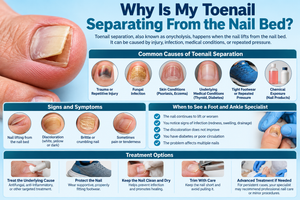
This condition is called onycholysis, which occurs when the nail plate separates from the nail bed. It can affect one or more toenails and may develop gradually or after an injury.
Common causes include fungal infections, repeated pressure from shoes, toenail injuries, and certain skin conditions. Although some cases are painless, nail separation can expose sensitive tissue and increase the risk of complications.
At Orange County Foot & Ankle Institute, Dr. Amir Lebaschi, DPM evaluates toenail separation to identify the underlying cause and recommend appropriate treatment.
What Is Onycholysis?
Onycholysis is the medical term for the separation of a fingernail or toenail from the underlying nail bed.
Normally, the nail plate remains attached to the skin beneath it. When separation occurs, an air-filled space develops between the nail and nail bed.
The affected area may appear white, yellow, or discolored. As the separation progresses, the nail may become loose or catch on socks and shoes.
Onycholysis is often painless initially. However, discomfort may develop if the loose nail becomes injured or surrounding tissue becomes inflamed.
Once a section of the nail separates, it generally cannot reattach. Instead, a new nail must grow forward while the underlying problem is addressed.
Common Causes of Toenail Separation
Several conditions can cause a toenail to lift away from its nail bed.
1. Fungal Toenail Infection
A fungal nail infection, also called onychomycosis, is a common cause of toenail changes.
Fungal infections can cause the nail to become thick, brittle, yellow, or crumbly. Debris may collect beneath the nail and gradually lift it away from the nail bed.
Not every discolored or separated toenail has a fungal infection. A podiatrist may recommend testing before starting antifungal treatment.
2. Repeated Pressure From Shoes
Tight footwear can place constant pressure on the toenails, especially during walking, running, or sports.
Repeated friction may injure the nail bed and cause the nail to loosen.
This problem commonly affects runners, hikers, and people who wear shoes with narrow toe boxes.
3. Toenail Trauma
Dropping something on the toe, stubbing it, or repeatedly hitting the front of a shoe can damage the nail.
In some cases, blood collects beneath the toenail. This is called a subungual hematoma.
A significant injury may eventually cause part or all of the toenail to separate.
4. Skin Conditions
Certain skin conditions, including psoriasis, can affect nail growth and attachment.
Nail psoriasis may cause pitting, discoloration, thickening, or separation from the nail bed.
Other inflammatory skin disorders can also contribute to nail changes.
5. Other Medical Factors
Less commonly, toenail separation may be associated with certain medications, chemical irritation, or medical conditions affecting nail health.
A podiatric evaluation can help distinguish these causes from fungal infection or mechanical trauma.
Common Symptoms of Onycholysis
Toenail separation may develop gradually, and symptoms can vary depending on the underlying cause.
- A toenail lifting away from the nail bed
- White or yellow discoloration beneath the nail
- A visible gap under the toenail
- Thick or brittle nail tissue
- Debris collecting beneath the nail
- A loose or uneven nail edge
- Changes in toenail shape
- Tenderness when wearing shoes
- Redness or swelling if irritation or infection develops
A greenish discoloration may indicate bacterial colonization, while dark discoloration can have several causes, including trauma.
Persistent or unexplained dark pigmentation should receive professional evaluation.
Why Toenail Separation Should Not Be Ignored
A separated toenail can create a space where moisture, dirt, and microorganisms collect.
This may increase the risk of secondary infection, especially if the exposed nail bed becomes irritated or injured.
Loose nail edges can also catch on socks or footwear, causing additional separation or injury.
For patients with diabetes, neuropathy, or poor circulation, toenail problems deserve particular attention. Reduced sensation may make injuries harder to notice, while circulation problems can complicate healing.
Early evaluation can help prevent additional damage and identify conditions that require treatment.
How Is Toenail Separation Diagnosed?
A podiatric evaluation begins with an examination of the nail, surrounding skin, and nail bed.
During an appointment, Dr. Amir Lebaschi, DPM may assess:
- The extent of nail separation
- Nail thickness and discoloration
- Signs of fungal infection
- Previous nail injuries
- Footwear-related pressure
- Surrounding skin inflammation
- Nail growth patterns
- Circulation and sensation when appropriate
If a fungal infection is suspected, a nail sample may be collected for laboratory testing.
Additional evaluation may be necessary when the nail has unusual pigmentation, persistent bleeding, a suspicious growth, or unexplained changes.
Treatment Options for Toenail Separation
Treatment depends on what caused the nail to separate.
The goal is to protect the exposed tissue, prevent further damage, and support healthy nail growth.
Fungal Nail Treatment
If testing confirms a fungal infection, treatment may include topical or oral antifungal medication.
The appropriate treatment depends on the severity of infection, the number of nails involved, medical history, and medication considerations.
Professional Nail Trimming and Care
A podiatrist may carefully trim loose or damaged portions of the nail to reduce catching and irritation.
Patients should avoid pulling off the separated nail or cutting deeply beneath it.
Footwear Modifications
Shoes with a wider toe box can help reduce repeated pressure on the toenails.
Proper shoe fit is especially important for runners, athletes, and patients with recurring nail trauma.
Treatment of Underlying Skin Conditions
When psoriasis or another skin condition causes nail separation, treatment may focus on managing that condition.
Partial or Complete Nail Removal
In selected cases, a severely damaged, painful, or problematic toenail may require partial or complete removal.
However, nail removal is not necessary for every case of onycholysis.
A podiatrist can determine whether this procedure is appropriate.
Will a Separated Toenail Grow Back Normally?
Toenails grow slowly, and recovery may take several months.
A completely new big toenail often takes approximately 12 to 18 months to grow, although the timeline varies.
The separated portion of the old nail usually does not reattach to the nail bed. Instead, healthy new nail growth may gradually replace the damaged section.
If the nail matrix, which produces the nail, has sustained significant damage, the new nail may grow back thickened, irregular, or permanently changed.
Identifying and correcting the underlying cause can help reduce the risk of repeated separation.
How to Prevent Toenail Separation
Several habits can help protect toenails from unnecessary injury.
Helpful steps include:
- Wearing properly fitting shoes
- Choosing footwear with adequate toe room
- Trimming toenails straight across
- Avoiding excessively short nail trimming
- Keeping feet clean and dry
- Changing damp socks promptly
- Protecting toenails during sports
- Avoiding repeated pressure on the toes
- Treating fungal nail infections when diagnosed
- Avoiding harsh chemicals and aggressive nail cleaning
Patients with diabetes should also inspect their feet and toenails regularly for changes.
When Should You See a Podiatrist?
Schedule a podiatric evaluation if you notice:
- A toenail separating from the nail bed
- Persistent yellow, white, or green discoloration
- Thick or crumbly toenails
- Pain or swelling around the nail
- Drainage or an unpleasant odor
- A toenail that repeatedly becomes loose
- Nail separation after an injury
- A dark streak or unexplained pigmentation
- Changes affecting several toenails
- Toenail problems associated with diabetes or poor circulation
Seek prompt medical attention for spreading redness, pus, fever, severe pain, or significant injury.
A new or changing dark streak, especially one extending onto surrounding skin, should also be evaluated promptly.
The Bottom Line
Toenail separation, or onycholysis, occurs when the toenail lifts away from its underlying nail bed.
Common causes include fungal infections, repeated shoe pressure, nail trauma, and inflammatory skin conditions.
Although the condition may initially be painless, leaving the underlying cause untreated can lead to repeated nail damage, discomfort, or secondary infection.
At Orange County Foot & Ankle Institute, Dr. Amir Lebaschi, DPM evaluates toenail separation, fungal nail infections, nail injuries, and other toenail abnormalities.
If your toenail is lifting, changing color, or becoming loose, a podiatric evaluation can help identify the cause and determine the most appropriate treatment.