
Pain and stiffness in the big toe can make everyday activities uncomfortable. Walking, running, climbing stairs, and even wearing certain shoes may become difficult when the big toe joint does not move properly.
One possible cause is hallux rigidus, a form of arthritis that affects the joint at the base of the big toe. This condition can cause pain, swelling, stiffness, and limited movement. Over time, the joint may become increasingly difficult to bend.
At Orange County Foot & Ankle Institute, Dr. Amir Lebaschi, DPM evaluates big toe pain and stiffness to identify the underlying cause and recommend appropriate treatment options.
What Is Hallux Rigidus?
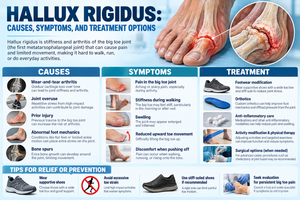
Hallux rigidus is a form of degenerative arthritis that affects the first metatarsophalangeal joint, commonly called the big toe joint
This joint connects the first metatarsal bone to the base of the big toe. It plays an important role in walking, balance, and pushing off the ground.
Healthy cartilage allows the bones within the joint to move smoothly. When cartilage gradually wears down, the joint may become painful and stiff.
As the condition progresses, bone spurs may develop around the joint. These bony growths can further limit movement and make wearing shoes uncomfortable.
In earlier stages, patients may experience hallux limitus, which describes restricted movement of the big toe joint. Hallux rigidus generally refers to more advanced stiffness associated with arthritis.
What Causes Hallux Rigidus?
Hallux rigidus develops when the cartilage inside the big toe joint deteriorates.
Several factors may contribute to this process.
Common causes and risk factors include:
- Joint wear and tear: Repeated stress can contribute to cartilage degeneration over time.
- Previous injuries: Trauma to the big toe joint may increase the risk of arthritis.
- Foot structure: Certain foot shapes and biomechanical patterns may place additional stress on the joint.
- Family history: Some patients may inherit characteristics that increase their risk.
- Repetitive activities: Frequent squatting, bending, or pushing off the big toe may aggravate symptoms.
- Inflammatory joint conditions: Certain forms of arthritis can also affect the big toe, although they are distinct from typical degenerative hallux rigidus.
Not every patient has an identifiable cause. In some cases, the condition develops gradually without a significant previous injury.
Common Symptoms of Hallux Rigidus
Hallux rigidus often begins with mild discomfort or reduced movement in the big toe.
As arthritis progresses, symptoms may become more noticeable.
Common warning signs include:
- Pain at the base of the big toe
- Stiffness when bending the toe upward
- Swelling around the big toe joint
- Difficulty walking or pushing off the foot
- Pain during running or exercise
- A hard bump on top of the big toe joint
- Discomfort when wearing certain shoes
- Reduced range of motion
- Changes in walking patterns
- Increasing joint stiffness over time
Some patients notice pain when climbing stairs, kneeling, or walking uphill.
Others may experience discomfort from shoes rubbing against a prominent bone spur.
How Hallux Rigidus Affects Walking
The big toe joint plays an important role during the final phase of walking.
As the heel lifts from the ground, the big toe normally bends upward to allow the foot to push forward.
When hallux rigidus limits this movement, walking may become painful or uncomfortable.
Some patients compensate by shifting their weight toward the outside of the foot. Others may shorten their steps or avoid bending the big toe.
These changes can affect walking efficiency and place additional stress on other parts of the foot.
Proper evaluation can help identify these movement problems before they cause further discomfort.
Hallux Rigidus vs. Bunions: What Is the Difference?
Hallux rigidus and bunions both affect the big toe joint, but they are different conditions.
Hallux rigidus primarily involves arthritis, cartilage degeneration, joint stiffness, and reduced movement.
A bunion, also called hallux valgus, involves a structural change in the alignment of the big toe and first metatarsal bone.
Patients with bunions often develop a visible bump along the inner side of the foot. Hallux rigidus may cause a bony prominence on top of the joint.
Although these conditions can occur together, they require different treatment approaches.
A podiatric examination can help determine whether symptoms come from arthritis, structural deformity, or another joint problem.
How Is Hallux Rigidus Diagnosed?
Diagnosis begins with a physical examination and a review of the patient’s symptoms.
During an evaluation, Dr. Amir Lebaschi, DPM may assess:
- Big toe joint movement
- Pain and tenderness
- Swelling around the joint
- Bone spur formation.
- Foot alignment
- Walking mechanics
- Shoe-related pressure
- Previous injuries
- Functional limitations
X-rays may help identify joint space narrowing, bone spurs, and other arthritic changes.
These findings can help determine the severity of the condition and guide treatment decisions.
Non-Surgical Treatment Options
Many patients with hallux rigidus begin with conservative treatment.
The goal is to reduce pain, limit irritating joint movement, and improve daily comfort.
Treatment options may include:
- Supportive footwear: Shoes with a wide toe box can reduce pressure around the joint.
- Stiff-soled shoes: These may limit painful bending of the big toe.
- Rocker-bottom soles: Appropriate footwear may reduce the movement required at the affected joint.
- Custom orthotics: Certain orthotic modifications can help control joint motion and redistribute pressure.
- Activity modification: Reducing activities that repeatedly bend the toe may help relieve symptoms.
- Ice therapy: Applying ice may help manage temporary discomfort and swelling.
- Anti-inflammatory medication: A healthcare provider may recommend medication when medically appropriate.
- Corticosteroid injections: In selected patients, injections may provide temporary symptom relief.
Conservative treatment can improve comfort, but it does not reverse established cartilage loss.
When Is Surgery Considered?
Surgery may be considered when hallux rigidus causes significant pain or functional limitations despite appropriate conservative care.
The recommended procedure depends on the severity of arthritis, joint movement, bone spur formation, and the patient’s activity needs.
Common surgical options include:
Cheilectomy
A cheilectomy removes bone spurs and excess bone around the big toe joint. This procedure may help improve movement and reduce pain in selected patients with earlier-stage arthritis.
Joint Fusion (Arthrodesis)
Joint fusion permanently joins the bones of the big toe joint. It can provide reliable pain relief for advanced arthritis but eliminates movement at that joint.
Joint Replacement or Motion-Preserving Procedures
Selected patients may be candidates for procedures designed to preserve some joint movement. These options have specific indications and limitations, and outcomes vary.
Not every patient needs surgery. A thorough evaluation helps determine whether conservative care or surgical treatment is more appropriate.
Can Hallux Rigidus Be Prevented?
Not every case of hallux rigidus can be prevented. Genetics, previous injuries, and natural cartilage degeneration may contribute to its development.
However, certain habits may help reduce discomfort and unnecessary stress on the big toe joint.
Helpful steps include:
- Wearing supportive shoes
- Avoiding shoes that repeatedly compress the toes
- Choosing footwear appropriate for daily activities
- Managing repetitive stress on the big toe
- Addressing foot injuries promptly
- Maintaining a healthy activity level
- Seeking evaluation for persistent joint pain
- Using prescribed orthotics when appropriate
Early treatment may help manage symptoms and maintain mobility, although it cannot guarantee
prevention of arthritis progression.
When Should You See a Podiatrist?
Schedule a podiatric evaluation if you experience:
- Persistent pain in the big toe joint
- Stiffness that continues to worsen
- Difficulty bending the big toe
- Swelling around the joint
- A painful bump on top of the big toe
- Pain when walking or climbing stairs
- Difficulty wearing regular shoes
- Reduced ability to exercise
- Changes in the way you walk
- Big toe pain that does not improve with rest
Sudden severe pain, marked redness, significant warmth, or fever requires prompt medical assessment because other conditions, including gout or infection, may cause similar symptoms.
The Bottom Line
Pain and stiffness in the big toe can make walking, running, and daily activities uncomfortable. Hallux rigidus treatment focuses on reducing pain, improving comfort, and managing arthritis in the big toe joint.
Hallux rigidus is a form of degenerative arthritis that causes joint stiffness, swelling, and limited movement. Over time, the condition may make it increasingly difficult to bend the big toe.
At Orange County Foot & Ankle Institute, Dr. Amir Lebaschi, DPM evaluates big toe pain and stiffness to identify the underlying cause and recommend appropriate treatment options.
If stiffness or pain in your big toe is affecting walking, exercise, or daily comfort, early podiatric evaluation can help identify the problem and determine the most appropriate treatment options.