
Heel pain can make walking, standing, exercising, and daily activities uncomfortable. Many patients assume that pain under the heel automatically means plantar fasciitis. However, another condition called heel fat pad syndrome can cause similar discomfort.
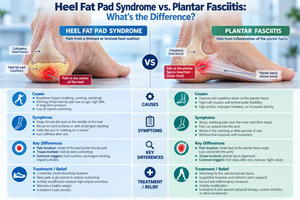
Although both conditions affect the bottom of the heel, they involve different tissues. Plantar fasciitis affects the plantar fascia, while heel fat pad syndrome affects the cushioning tissue beneath the heel bone.
Understanding the difference is important because each condition may require a different treatment approach.
At Orange County Foot & Ankle Institute, Dr. Amir Lebaschi, DPM evaluates persistent heel pain to identify the underlying cause and recommend appropriate treatment options.
What Is Heel Fat Pad Syndrome?
Heel fat pad syndrome occurs when the natural cushioning tissue beneath the heel becomes thinner, damaged, or less effective at absorbing pressure.
The heel fat pad contains specialized fatty tissue supported by flexible connective tissue. This structure helps absorb shock and protect the heel bone during walking, running, and standing.
Over time, repeated pressure, aging, or injury may affect the fat pad’s ability to cushion the heel.
When this protective layer becomes less effective, patients may experience a deep, aching sensation directly beneath the center of the heel.
What Causes Heel Fat Pad Syndrome?
Several factors may contribute to the development of heel fat pad syndrome.
- Age-related changes in the heel’s cushioning tissue
- Repeated impact from running or jumping
- Prolonged standing on hard surfaces
- Walking barefoot on concrete or tile
- Shoes with inadequate cushioning
- Increased pressure related to body weight
- Previous heel injuries
- Repetitive stress on the heel
- Changes in foot mechanics
Repeated corticosteroid injections near the heel may also contribute to fat pad damage or thinning.
Not every patient has the same underlying cause. A podiatric evaluation can help identify factors that may be placing excessive pressure on the heel.
Common Symptoms of Heel Fat Pad Syndrome
Heel fat pad syndrome often causes discomfort in the center of the heel. Patients may describe the pain as a deep bruise or the feeling of walking directly on a hard surface.
- Deep, bruise-like pain beneath the center of the heel
- Tenderness when pressing on the heel
- Pain when walking barefoot
- Discomfort on hard floors
- Pain that increases with prolonged standing
- Heel soreness after running or jumping
- Reduced comfort when wearing thin-soled shoes
- Pain that becomes more noticeable throughout the day
Unlike classic plantar fasciitis, heel fat pad pain often increases with continued pressure rather than being most severe during the first morning steps.
What Is Plantar Fasciitis?
Plantar fasciitis is a common cause of heel pain involving irritation and degenerative changes in the plantar fascia.
The plantar fascia is a thick band of connective tissue that runs along the bottom of the foot. It connects the heel bone to the toes and helps support the arch.
Repeated stress can irritate this tissue and cause pain near its attachment to the heel bone.
Patients commonly experience sharp pain with their first steps after waking up or after sitting for an extended period.
The discomfort may improve after walking briefly but return after prolonged standing or activity.
What Causes Plantar Fasciitis?
Plantar fasciitis can develop when repeated stress exceeds the plantar fascia’s ability to tolerate loading.
- Tight calf muscles
- Limited ankle flexibility
- Sudden increases in physical activity
- Running or jumping
- Prolonged standing
- Unsupportive footwear
- Foot mechanics that increase plantar fascia strain
- Increased body weight
- Repetitive pressure on the heel
The condition may develop gradually and become persistent when the underlying stress continues.
Common Symptoms of Plantar Fasciitis
Plantar fasciitis usually causes pain along the bottom or inner portion of the heel.
- Sharp heel pain with the first steps in the morning
- Pain after sitting or resting
- Tenderness near the inner underside of the heel
- Discomfort that may extend toward the arch
- Pain after prolonged standing
- Heel pain after running or exercise
- Tightness along the bottom of the foot
- Pain that improves temporarily with movement
These symptoms can help distinguish plantar fasciitis from heel fat pad syndrome. However, symptoms may overlap, and some patients can have both conditions.
Heel Fat Pad Syndrome vs. Plantar Fasciitis: The Main Differences
Although both conditions cause heel pain, several characteristics may help distinguish them.
| Feature | Heel Fat Pad Syndrome | Plantar Fasciitis |
| Affected tissue | Cushioning tissue beneath the heel | Plantar fascia |
| Pain location | Center of the heel | Inner underside of the heel |
| Pain sensation | Deep, aching, or bruise-like | Sharp or stabbing |
| Morning pain | May occur but is less characteristic | Often worse with first steps |
| Hard surfaces | Commonly aggravate pain | May also increase symptoms |
| Prolonged standing | Often increases discomfort | Can worsen symptoms |
| Main treatment focus | Cushioning and pressure reduction | Load management and plantar fascia rehabilitation |
These differences provide useful clues, but they do not replace a professional diagnosis.
Why the Correct Diagnosis Matters
Not every case of heel pain comes from plantar fasciitis. Heel fat pad syndrome, stress fractures, nerve irritation, arthritis, and other conditions can produce similar symptoms.
Treating the wrong condition may delay improvement.
For example, a patient with heel fat pad syndrome may need additional cushioning and protection from direct pressure.
A patient with plantar fasciitis may benefit from stretching, strengthening, orthotics, and treatments that reduce strain on the plantar fascia.
A podiatric evaluation helps identify which tissues are involved and which treatment approach is most appropriate.
How Is Heel Pain Diagnosed?
Diagnosis begins with a physical examination and review of the patient’s symptoms.
During an evaluation, Dr. Amir Lebaschi, DPM may assess:
- The exact location of heel pain
- Tenderness beneath the heel
- Plantar fascia irritation
- Heel cushioning and pressure areas
- Foot and ankle flexibility
- Walking mechanics
- Footwear and activity history
- Previous foot injuries
- Nerve sensation and circulation when appropriate
Imaging may be recommended when the diagnosis is unclear.
X-rays can help evaluate bone-related problems, while ultrasound or MRI may provide additional information about soft tissues or suspected stress injuries
Not every patient requires advanced imaging.
Treatment Options for Heel Fat Pad Syndrome
Treatment focuses on protecting the heel and reducing repeated pressure on the cushioning tissue.
Cushioned Footwear Shoes with adequate heel cushioning may help reduce impact during walking and standing.
Heel Cups and Protective Inserts Soft heel cups or shock-absorbing inserts may help distribute pressure beneath the heel.
Activity Modification Reducing running, jumping, or prolonged standing may help manage symptoms while the heel recovers.
Avoiding Barefoot Walking Walking barefoot on hard floors can increase direct pressure on the heel.Supportive footwear may provide better protection.
Taping and Padding A podiatrist may recommend taping or padding to help support the heel’s cushionin
tissue.
Custom Orthotics Certain orthotic designs may improve pressure distribution and reduce excessive heel
loading.
Treatment effectiveness can vary, and research on heel fat pad syndrome remains more limited than research on plantar fasciitis.
Treatment Options for Plantar Fasciitis
Plantar fasciitis treatment focuses on reducing excessive stress and improving the plantar fascia’s ability to tolerate activity
- Plantar fascia stretching
- Calf stretching exercise
- Supportive footwear
- Custom orthotics when appropriate
- Activity modification
- Ice therapy for temporary symptom relief
- Physical therapy
- Foot and ankle strengthening
- Night splints
- Shockwave therapy for selected chronic cases
- Medication or other treatments when medically appropriate
Many patients improve without surgery.
The treatment plan depends on symptom duration, activity level, foot mechanics, and response to previous care.
Can Both Conditions Happen at the Same Time?
Yes. Some patients may experience both plantar fasciitis and heel fat pad syndrome.
Changes in walking mechanics, repetitive loading, or prolonged heel pain can place stress on multiple structures.
A patient may experience sharp pain near the inner heel along with deeper discomfort beneath the center of the heel.
When both conditions are present, treatment may need to address plantar fascia strain and heel cushioning simultaneously.
This is another reason a proper diagnosis is important.
How to Help Prevent Heel Pain
Several habits may help reduce stress on the heel.
- Wearing properly fitting shoes
- Choosing footwear with adequate cushioning
- Avoiding prolonged barefoot walking on hard floors
- Increasing exercise intensity gradually
- Stretching tight calf muscles
- Maintaining appropriate foot and ankle strength
- Replacing worn-out shoes
- Taking breaks during prolonged standing
- Managing repetitive impact activities
- Addressing heel pain before it becomes persistent
Patients who spend long hours standing or walking may benefit from footwear that provides adequate support and cushioning.
When Should You See a Podiatrist?
Schedule a podiatric evaluation if you experience:
- Heel pain lasting more than a few weeks
- Persistent discomfort beneath the center of the heel
- Sharp pain with the first steps in the morning
- Pain when walking barefoot
- Heel tenderness on hard surfaces
- Pain that increases with prolonged standing
- Difficulty walking or exercising
- Heel pain that keeps returning
- Symptoms that do not improve with conservative care
- Changes in walking patterns because of heel discomfort
Seek prompt medical attention if heel pain follows a significant injury, causes an inability to bear weight, or occurs with marked swelling, redness, fever, or concerning skin changes.
The Bottom Line
Heel fat pad syndrome and plantar fasciitis are different conditions that can cause similar heel pain.
Heel fat pad syndrome affects the natural cushioning tissue beneath the heel. It often causes deep, bruise-like pain in the center of the heel, especially during prolonged standing or walking on hard surfaces.
Plantar fasciitis affects the plantar fascia and commonly causes sharp pain near the inner heel, particularly with the first steps after rest.
At Orange County Foot & Ankle Institute, Dr. Amir Lebaschi, DPM evaluates persistent heel pain to identify the underlying cause and develop individualized treatment plans.
If heel pain is affecting your walking, work, exercise, or daily comfort, a podiatric evaluation can help determine whether plantar fasciitis, heel fat pad syndrome, or another condition may be responsible.