
Foot pain can affect walking, standing, exercising, and everyday comfort. For patients with recurring heel pain, arch discomfort, flat feet, or pressure-related foot problems, orthotics may help provide additional support and improve how pressure is distributed across the feet.
Traditional custom orthotics have been used for many years to address certain foot conditions. Today, advances in digital scanning and manufacturing have introduced another option: 3D-printed orthotics.
These devices use digital technology to create customized shoe inserts based on a patient’s foot shape and treatment needs. However, many patients wonder whether 3D-printed orthotics are actually better than traditional orthotics and whether the additional technology is worth considering.
At Orange County Foot & Ankle Institute, Dr. Amir Lebaschi, DPM evaluates foot pain, pressure distribution, and walking mechanics to help patients understand which orthotic options may be appropriate for their condition.
What Are 3D-Printed Orthotics?
3D-printed orthotics are shoe inserts manufactured using three-dimensional printing technology, also called additive manufacturing.
Unlike traditional manufacturing methods that shape or mold materials, 3D printing builds an orthotic layer by layer according to a digital design.
The design may use information from a 3D foot scan, measurements, and a clinical assessment. This allows the manufacturer to customize the shape, thickness, support, and selected structural features of the device.
Depending on the design and materials, 3D-printed orthotics may help support the arch, redistribute pressure, and improve comfort during walking or standing.
However, the printing method alone does not guarantee that an orthotic will provide better treatment outcomes.
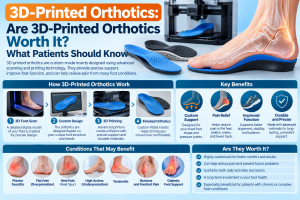
How Are 3D-Printed Orthotics Made?
The process generally begins with a clinical foot examination. A podiatrist evaluates the patient’s symptoms, foot structure, activity level, footwear, and walking mechanics. The manufacturing process may then involve several steps.
1. Digital Foot Scanning
A digital scanner captures the three-dimensional shape of the foot. This creates a digital model that can guide the design of a custom orthotic.
2. Orthotic Design
Specialized software helps create an orthotic design based on the patient’s needs. The design may include arch support, heel cushioning, pressure-relief areas, and other modifications.
3. 3D Printing
A 3D printer builds the orthotic using selected materials. Depending on the device, manufacturers may use flexible polymers or other materials designed to provide support and durability.
4. Fitting and Adjustments
Once the orthotic is ready, the patient may return for a fitting. The provider checks how the device fits inside the shoe and whether adjustments are needed for comfort or function.
The exact process varies by orthotic manufacturer and clinical provider.
What Are the Potential Benefits of 3D-Printed Orthotics?
3D printing offers several possible advantages in orthotic manufacturing.
Customized Fit
Digital technology allows manufacturers to create orthotics based on a detailed model of the patient’s foot. A customized shape may help improve contact, support, and pressure distribution. However, accurate scanning and appropriate clinical design remain essential.
Targeted Pressure Relief
Some 3D-printed orthotics use different structural patterns or material properties in specific areas. These designs may help redistribute pressure away from sensitive parts of the foot. Pressure reduction can be useful for selected patients with recurring discomfort or high-pressure areas.
Lightweight Design
Certain 3D-printing methods allow manufacturers to create lightweight structures without eliminating necessary support. The weight depends on the materials, design, and thickness of the orthotic.
Digital Customization
Digital designs can be modified to adjust selected features, such as arch height, stiffness, or cushioning. Manufacturers may also retain design files for future adjustments or reproduction.
Manufacturing Flexibility
Digital manufacturing can reduce the need for certain traditional molds and allow changes to the orthotic design. However, production time and cost vary between manufacturers.
Can 3D-Printed Orthotics Help Plantar Fasciitis?
Plantar fasciitis is a common cause of heel pain. It involves irritation and degenerative changes in the plantar fascia, the thick band of tissue that supports the arch.
Orthotics may help some patients by supporting the foot and reducing excessive strain on painful areas. For certain patients, 3D-printed orthotics may offer a customized way to distribute pressure and improve comfort.
However, research has not established that 3D-printed orthotics are consistently better than well-designed traditional orthotics for plantar fasciitis.
Treatment may also require stretching, supportive footwear, strengthening exercises, activity modification, or other podiatric care.
Can 3D-Printed Orthotics Help Flat Feet?
Flat feet occur when the arch of the foot is low or collapses excessively during weight-bearing.
Some patients experience no symptoms, while others develop arch pain, heel discomfort, ankle fatigue, or difficulty standing for long periods.
Orthotics may help support the foot and improve pressure distribution. 3D-printed designs can provide customized arch support and selected structural features.
Research suggests that certain customized 3D-printed orthotics may improve comfort and pain in patients with symptomatic flat feet.
However, orthotics generally help manage symptoms and function rather than permanently correcting the underlying foot structure.
Are 3D-Printed Orthotics Better Than Traditional Custom Orthotics?
Both traditional and 3D-printed orthotics can provide customized support. The primary difference is how the devices are designed and manufactured.
Traditional custom orthotics may use casts, foam impressions, or digital scans. Manufacturers then shape materials according to the prescribed design.
3D-printed orthotics use digital models and additive manufacturing to create the device
Both approaches can provide:
- Customized arch support
- Heel stabilization
- Pressure redistribution
- Support for selected foot conditions
- Adjustments based on patient needs
- Improved comfort when properly prescribed and fitted
Some studies report promising results for 3D-printed devices. However, evidence remains limited by differences in study methods, device designs, materials, and patient populations.
A well-designed traditional orthotic may work just as well as a 3D-printed option for many patients.
The most important factors are the patient’s diagnosis, orthotic prescription, device design, materials, footwear, and proper fit.
Who May Benefit From Custom Orthotics?
Custom orthotics may be considered for patients with certain foot conditions or recurring symptoms. These may include:
- Plantar fasciitis
- Chronic heel pain
- Symptomatic flat feet
- High arches with pressure-related discomfort
- Certain forms of arch pain
- Ball-of-foot pain
- Recurring pressure points
- Selected foot alignment problems
- Certain sports-related foot complaints
- Conditions requiring customized pressure redistribution
However, not every patient needs custom orthotics. Some foot problems respond well to supportive shoes, over-the-counter inserts, stretching, strengthening, or activity modification. A podiatrist can help determine whether a custom device would offer a meaningful benefit.
Are There Any Limitations?
Although 3D-printed orthotics offer promising technology, patients should understand their limitations.
They May Cost More
Custom orthotics may cost more than prefabricated shoe inserts. The price depends on the materials, manufacturing process, provider, and required modifications. Insurance coverage also varies.
Comfort Is Not Guaranteed
A digitally manufactured orthotic may still cause discomfort if its shape, stiffness, or pressure distribution does not match the patient’s needs. Proper fitting and follow-up adjustments remain important.
Durability Can Vary
The lifespan of a 3D-printed orthotic depends on the materials, design, activity level, and daily use. Some devices
may wear down or require replacement over time
They Do Not Treat Every Foot Condition
Orthotics cannot correct every structural problem or eliminate every cause of foot pain. Patients with fractures, infections, severe deformities, or other medical conditions may need different treatment approaches.
What Does Research Say About 3D-Printed Orthotics?
Clinical research suggests that 3D-printed orthotic devices may improve comfort, pressure distribution, and certain walking measurements.
A 2025 systematic review published in BMC Musculoskeletal Disorders examined clinical outcomes across different types of 3D-printed orthotic devices.
The researchers reported encouraging results for fit, comfort, mobility, and pressure redistribution. However, they also identified limitations involving study size, inconsistent methods, and durability.
Importantly, the review included different orthotic devices, not only shoe inserts.
Some studies found comparable results between traditional and 3D-printed orthotics. This suggests that the clinical design and suitability of the device may matter more than the manufacturing technology alone.
Additional long-term studies are needed to determine which patients benefit most from 3D-printed foot orthotics.
Are 3D-Printed Orthotics Worth the Investment?
The answer depends on the patient’s symptoms, treatment needs, and available options.
For some patients, a digitally designed orthotic may provide useful customization, targeted pressure relief, or improved comfort.
For others, traditional custom orthotics or high-quality prefabricated inserts may provide similar benefits.
Patients should consider several questions before choosing an orthotic:
- What foot condition needs treatment?
- Would a custom orthotic provide additional benefit?
- Is the device designed for the patient’s specific needs?
- Will it fit properly inside everyday footwear?
- Can the provider make adjustments if needed?
- How much will the orthotic cost?
- Is there evidence supporting its use for the patient’s condition?
The most expensive or technologically advanced device is not always the best choice.
When Should You See a Podiatrist?
Schedule a podiatric evaluation if you experience:
- Recurring heel pain
- Persistent arch discomfort
- Foot pain during walking or standing
- Pain related to flat feet
- Repeated pressure under the ball of the foot
- Uneven shoe wear
- Foot fatigue during daily activities
- Pain that returns after exercise
- Symptoms that do not improve with supportive shoes
- Difficulty finding comfortable footwear
A proper evaluation can help determine whether the pain comes from footwear, foot mechanics, soft tissue irritation, arthritis, or another condition.
The Bottom Line
3D-printed orthotics offer a modern approach to customized foot support.
Digital scanning and additive manufacturing allow manufacturers to create orthotics with selected structural features, pressure-relief areas, and customized designs.
Research suggests that these devices may improve comfort and pressure distribution for certain patients. However, current evidence does not show that 3D-printed orthotics are always superior to traditional custom orthotics.
The best orthotic is the one that addresses the patient’s specific foot condition, provides appropriate support, and fits comfortably.
At Orange County Foot & Ankle Institute, Dr. Amir Lebaschi, DPM evaluates foot pain, alignment concerns, and walking mechanics to help patients determine whether custom orthotics or other treatments may be appropriate.
If persistent heel pain, arch discomfort, or pressure-related foot problems are affecting your daily activities, a podiatric evaluation can help identify the cause and guide the right treatment plan.
Medical References
2025 Systematic Review — Clinical Outcomes of 3D-Printed Orthoses: https://pmc.ncbi.nlm.nih.gov/articles/PMC12400727/
Randomized Trial — 3D-Printed Foot Orthoses for Flat Feet: https://pubmed.ncbi.nlm.nih.gov/38958259/
Publishing Note
This article explains 3D-printed orthotics as an emerging treatment technology. It does not claim that Orange County Foot & Ankle Institute currently manufactures or dispenses 3D-printed devices. Confirm the clinic’s available orthotic services before adding service-specific claims.