
A bone fracture can take time to heal, especially when it happens in the foot or ankle. Some fractures improve with rest, protection, and immobilization. Others need closer monitoring, a cast, a walking boot, or surgery depending on the location and severity of the break.
At Orange County Foot & Ankle Institute, we want patients to understand that bone healing is a process. Pain may improve before the bone is fully healed, so returning to activity too early can slow recovery or make the injury worse.
How Bone Healing Starts
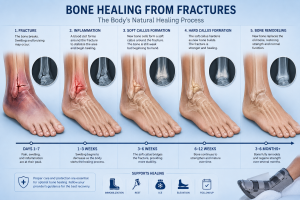
When a bone breaks, the body begins repairing the injury almost immediately. The first stage involves bleeding and inflammation around the fracture. This is the body’s natural response to injury.
Over time, the body starts forming new tissue around the broken area. This tissue helps stabilize the fracture and creates a bridge between the broken bone ends. As healing continues, the body replaces this early repair tissue with stronger bone.
Fracture healing can take several weeks to several months depending on the bone, the type of fracture, and the patient’s overall health. Some fractures may take longer, and full remodeling can continue for many months.
Why Stability Matters
For a fracture to heal properly, the broken bone needs stability. Too much movement at the fracture site can delay healing or prevent the bone from healing in the right position.
That is why treatment may include a splint, cast, brace, walking boot, crutches, or limited weightbearing. Some fractures need surgery to realign and stabilize the bone.
Foot and Ankle Fractures Need Careful Attention
Foot and ankle fractures can affect walking, balance, and daily activity. Even a small fracture can become more serious if the patient keeps walking on it without proper protection.
Common symptoms of a fracture may include pain, swelling, bruising, difficulty walking, tenderness, deformity, or pain that worsens with pressure. In some cases, patients may mistake a fracture for a sprain.
A podiatric evaluation can help confirm the injury and guide treatment. X-rays or other imaging may be needed to understand the fracture pattern and determine whether the bone is aligned.
What Can Slow Bone Healing?
Several factors can slow fracture healing. These may include poor circulation, smoking, diabetes, poor nutrition, infection, severe injury, repeated stress on the fracture, and returning to activity too soon
Foot and ankle fractures may also heal more slowly if the patient continues putting pressure on the injured area before the bone is ready.
Following the treatment plan matters. Wearing the boot or cast as directed, limiting weight-bearing, keeping follow-up visits, and avoiding early return to activity can help protect the healing bone.
Signs a Fracture Needs Medical Evaluation
You should seek medical care if you have:
- Pain after a fall, twist, or injury
- Swelling or bruising around the foot or ankle
- Difficulty walking or bearing weight
- Pain that does not improve with rest
- Tenderness over a specific bone
- A visible deformity
- Numbness, coldness, or color change
- An open wound near the injury
Do not ignore foot or ankle pain after trauma. Early diagnosis can help prevent poor healing, chronic pain, and long-term mobility problems.
The Bottom Line
Bone healing from fractures takes time, protection, and the right treatment plan. Even when pain improves, the bone may still need more time to become strong enough for normal activity.
At Orange County Foot & Ankle Institute, we evaluate foot and ankle fractures carefully and guide patients through the healing process. If you have foot or ankle pain after an injury, do not wait. Early care can help protect your recovery and support better healing.