
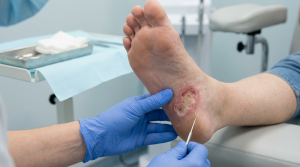
A foot wound that does not heal should never be ignored. Some wounds close with basic care, but others stay open because something is blocking the healing process.
In people with diabetes, common causes include poor circulation, nerve damage, pressure, and infection. These problems can make a foot wound worse instead of better.
At Orange County Foot & Ankle Institute, we want patients to understand that delayed healing usually has a reason. A wound may look small on the surface, but the real problem may be deeper. Poor blood flow, uncontrolled blood sugar, hidden infection, repeated pressure, or trauma from shoes can all prevent healing.
Poor Circulation Can Slow Healing
Your foot needs steady blood flow to heal. Blood carries oxygen, nutrients, and immune support to the wound. When circulation is poor, the tissue may not receive what it needs to repair properly.
This is a major concern with diabetic foot wounds. Reduced blood flow to the legs and feet can make sores and infections harder to heal. Even a small cut may heal slowly or fail to close if circulation is poor.
Diabetes May Be Part of the Problem
High blood sugar affects healing in several ways. It can damage nerves, reduce blood flow, and weaken the body’s ability to fight infection.
This combination makes foot wounds much harder to manage. Diabetes can also make sores harder to notice. If nerve damage is present, a patient may not feel a blister, cut, or pressure sore until it becomes more serious.
Without early treatment, diabetic foot wounds can become infected and may lead to serious complications.
You May Have Nerve Damage and Not Know It
Many patients expect a serious wound to hurt. With diabetic neuropathy, that does not always happen.
Nerve damage can reduce feeling in the feet. A patient may continue walking on a blister, pressure point, or cut without realizing it. Over time, the wound can grow larger, deepen, or become infected.
This is one reason daily foot checks are so important for patients with diabetes or numbness in the feet.
Infection May Be Preventing the Wound From Closing
A wound cannot heal properly when infection is active. Bacteria can damage tissue, increase inflammation, and slow the healing process.
Warning signs may include redness, swelling, warmth, drainage, odor, increased pain, or skin discoloration. In some cases, infection can spread deeper than the skin and become more serious.
Any foot wound with signs of infection should be evaluated quickly.
Too Much Pressure Can Keep Reopening the Area
Some foot wounds fail to heal because the area never gets a real chance to rest. Each step can place pressure on the same damaged tissue again and again.
This is especially common on the bottom of the foot. Walking, tight shoes, poor support, or abnormal foot mechanics can keep reopening the wound.
Even the best wound treatment may fail if pressure is not controlled. Offloading, supportive footwear, custom inserts, padding, or other protective measures may be needed so the tissue can recover.
Sometimes the Wound Needs More Than Basic Care
If a wound has stayed open for too long, home care may not be enough. Some wounds need professional wound care to identify what is preventing healing.
Treatment may include debridement, infection control, pressure relief, circulation evaluation, advanced wound dressings, or other wound care options. In certain cases, grafting or a surgical approach may be considered after the wound bed is properly prepared.
The main point is simple: when a foot wound is not healing, waiting longer is usually not the answer. The best approach is to find what is stopping the healing process and treat that cause directly.
When to Get Your Foot Wound Checked
You should have a foot wound evaluated if it:
- Is not getting smaller
- Becomes red, swollen, warm, or painful
- Has drainage or odor
- Looks deep, dark, or discolored
- Keeps reopening
- Is located on the bottom of the foot
- Is associated with diabetes or poor circulation
The Bottom Line
If your foot wound is not healing, there is usually a reason. Poor circulation, diabetes, nerve damage, pressure, and infection are some of the most common causes.
The longer a wound stays open, the higher the risk of serious complications.
At Orange County Foot & Ankle Institute, we evaluate non-healing foot wounds carefully to find the real cause and create the right treatment plan. If your wound is not improving, keeps coming back, or appears to be getting worse, do not wait. Early treatment can help protect your foot and support better healing.