
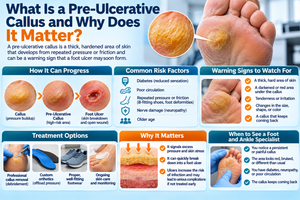
A callus may seem like a harmless patch of thick skin, but for patients with diabetes, it can sometimes signal a more serious problem. Repeated pressure on the foot can cause the skin to thicken, especially around the heel, ball of the foot, or toes.
When this pressure continues, the tissue beneath the callus may become damaged. In some cases, the area can develop into an open wound or diabetic foot ulcer.
A pre-ulcerative callus is a thickened area of skin that shows signs of increased risk for skin breakdown. It may develop over a high-pressure area before an ulcer forms.
At Orange County Foot & Ankle Institute, Dr. Amir Lebaschi, DPM evaluates calluses, pressure points, and diabetic foot concerns to identify early warning signs and help prevent serious complications.
What Is a Pre-Ulcerative Callus?
A pre-ulcerative callus is an area of thickened skin that may develop into an ulcer if repeated pressure or friction continues.
Calluses form as the skin’s natural response to mechanical stress. When one area of the foot experiences repeated pressure, the outer layer of skin becomes thicker.
Although this process initially protects the skin, excessive callus buildup can increase pressure on the underlying tissue.
Over time, this may cause tissue damage, bleeding beneath the callus, or skin breakdown.
Pre-ulcerative calluses are particularly concerning in patients with diabetes, neuropathy, foot deformities, or a history of diabetic foot ulcers.
What Causes a Pre-Ulcerative Callus?
Pre-ulcerative calluses develop when repeated mechanical pressure affects the same area of the foot.
Several factors can contribute to their formation.
Common causes and risk factors include:
- Repeated pressure: Standing and walking can place excessive stress on specific areas of the foot.
- Poorly fitting shoes: Tight or narrow footwear may cause repeated rubbing.
- Foot deformities: Bunions, hammertoes, and prominent bones can create abnormal pressure points.
- Abnormal foot mechanics: Changes in walking patterns may increase pressure beneath certain parts of the foot.
- Diabetic neuropathy: Reduced protective sensation can allow pressure-related damage to continue unnoticed.
- Previous foot ulcers: Areas with previous wounds may be more vulnerable to repeated breakdown.
- Limited joint mobility: Stiff joints can change how pressure is distributed during walking.
- Inadequate footwear support: Shoes that do not accommodate foot shape or pressure areas may contribute to callus formation.
Identifying the source of pressure is important because a callus may return when the underlying mechanical problem remains untreated.
Why Are Pre-Ulcerative Calluses Dangerous for Diabetic Patients?
Diabetes can damage the nerves and blood vessels in the feet.
When neuropathy develops, patients may lose protective sensation. This means they may not feel pain, pressure, or irritation normally.
As a result, a patient may continue walking on an area of excessive pressure without realizing that tissue damage is occurring.
Poor circulation can also make healing more difficult if the skin breaks down.
A pre-ulcerative callus may therefore become more serious when nerve damage, reduced blood flow, and repeated pressure occur together.
Early recognition is important because the skin may appear intact even when the underlying tissue is already under stress.
How Can a Callus Turn Into a Foot Ulcer?
A callus develops when repeated pressure causes the skin to thicken.
However, excessive buildup can increase concentrated pressure beneath the hardened area.
With continued walking or standing, the underlying soft tissue may become damaged.
Small blood vessels can break, creating bleeding beneath the callus. This may appear as dark red, brown, or black discoloration.
If pressure continues, the skin may eventually break down and form an open wound.
This process is especially concerning in patients with diabetic neuropathy because significant tissue damage may occur without severe pain.
Not every callus becomes an ulcer. However, calluses associated with bleeding, discoloration, or persistent high pressure require professional evaluation.
Warning Signs of a Pre-Ulcerative Callus
A pre-ulcerative callus may not cause noticeable pain, especially when diabetic neuropathy is present.
Warning signs may include:
- Thickened skin over a pressure point
- A callus that continues to grow
- Dark or reddish discoloration beneath the skin
- Bleeding beneath a callus
- Redness around the affected area
- A hard callus over a prominent bone
- Skin cracking or early breakdown
- Repeated callus formation in the same location
- Swelling or changes in skin temperature
- Numbness around the affected area
A callus with visible bleeding or dark discoloration may indicate underlying tissue injury.
Patients should not assume that the absence of pain means the area is healthy.
Where Do Pre-Ulcerative Calluses Commonly Develop?
Pre-ulcerative calluses often appear in areas that experience repeated pressure during standing and walking.
Common locations include:
- Under the ball of the foot
- Beneath the metatarsal heads
- Under the big toe
- Along the sides of the toes
- Over hammertoe joints
- Around prominent bones
- Beneath the heel
- Areas affected by foot deformities
The location of the callus can provide clues about the underlying pressure problem.
A podiatrist may assess foot structure, footwear, and walking mechanics to determine why the skin continues to thicken.
Why You Should Never Cut a Callus at Home
Patients may try to remove thickened skin using razors, scissors, callus shavers, or medicated corn removers.
However, these methods can damage healthy skin and create wounds.
For patients with diabetes, neuropathy, or poor circulation, even a small cut can become difficult to heal.
Some over-the-counter corn and callus removers contain acids that can cause chemical burns or skin irritation.
Professional callus care is safer for high-risk patients because a podiatrist can assess the skin and carefully remove excess thickened tissue when appropriate.
Patients should avoid aggressive self-treatment, especially when the callus is discolored, bleeding, or associated with reduced sensation.
How Is a Pre-Ulcerative Callus Diagnosed?
A podiatric evaluation focuses on identifying both the callus and the pressure that caused it.
During an examination, Dr. Amir Lebaschi, DPM may assess:
- Callus location and thickness
- Signs of bleeding beneath the skin
- Skin integrity
- Pressure distribution
- Foot structure and deformities
- Walking mechanics
- Shoe fit
- Nerve sensation
- Blood circulation
- Previous foot wounds or ulcers
Careful examination can help determine whether the skin remains intact or whether an ulcer has already developed beneath the thickened tissue.
Additional testing may be recommended when circulation problems, neuropathy, or deeper tissue damage are suspected.
Treatment Options for Pre-Ulcerative Calluses
Treatment focuses on protecting the skin, reducing excessive pressure, and preventing ulcer formation.
The appropriate approach depends on the patient’s foot structure, skin condition, circulation, and overall risk.
Professional Callus Reduction
A podiatrist may carefully remove excess thickened skin using sterile instruments.
This procedure can reduce concentrated pressure and allow the underlying skin to be examined.
Patients with diabetes should avoid attempting this procedure at home.
Pressure Relief and Offloading
Offloading reduces pressure on vulnerable areas of the foot.
Depending on the location of the callus, treatment may involve padding, footwear modifications, protective inserts, or other pressure-relieving devices.
Reducing repeated pressure is essential because a callus may return if the original cause remains.
Custom Orthotics
Custom orthotics may help redistribute pressure across the foot.
They can be useful for selected patients with abnormal foot mechanics, recurring pressure areas, or structural deformities.
However, orthotics should be properly designed and fitted to avoid creating new pressure points.
Diabetic Footwear
Patients at increased risk of foot ulcers may benefit from properly fitted therapeutic footwear.
Extra-depth shoes, protective insoles, or customized footwear may help accommodate deformities and reduce repeated friction.
A podiatrist can determine which footwear options are appropriate.
Management of Underlying Conditions
Treatment may also involve evaluating neuropathy, circulation problems, blood sugar management, and structural foot conditions.
Addressing these factors can help reduce the risk of future wounds.
Can a Pre-Ulcerative Callus Be Prevented?
Many pressure-related foot problems can be reduced through preventive care.
Helpful habits include:
- Inspecting the feet every day
- Wearing properly fitting shoes
- Checking footwear for rough seams or foreign objects
- Avoiding barefoot walking
- Keeping the skin clean and moisturized
- Avoiding lotion between the toes
- Managing blood sugar according to the diabetes care plan
- Using prescribed orthotics or protective footwear
- Avoiding home callus cutting
- Scheduling regular diabetic foot evaluations
- Reporting new pressure spots or skin changes promptly
For high-risk patients, preventive care is especially important because nerve damage may make early injuries difficult to detect.
When Should You See a Podiatrist?
Patients with diabetes should have new or recurring calluses evaluated, especially when neuropathy or poor circulation is present.
Seek prompt podiatric care if you notice:
- A callus with dark or bloody discoloration
- Bleeding beneath thickened skin
- A callus that keeps returning
- Redness or swelling around a pressure area
- Cracking or opening of the skin
- Drainage or an unpleasant odor
- A new sore beneath or near a callus
- A callus over a bunion or hammertoe
- Numbness with visible skin changes
- A history of diabetic foot ulcers
A wound with spreading redness, pus, fever, rapidly worsening swelling, or blackened tissue requires urgent medical assessment.
Do not wait for pain. Patients with diabetic neuropathy may develop significant tissue damage without noticeable discomfort.
The Bottom Line
A pre-ulcerative callus is more than a patch of thick skin. It can be an early warning sign that repeated pressure is placing the underlying tissue at risk.
For patients with diabetes, neuropathy, poor circulation, or foot deformities, a callus may develop into an ulcer if the pressure continues.
Early evaluation, professional callus care, pressure relief, appropriate footwear, and ongoing diabetic foot monitoring can help reduce the risk of serious complications.
At Orange County Foot & Ankle Institute, Dr. Amir Lebaschi, DPM evaluates pre-ulcerative calluses, diabetic foot pressure areas, neuropathy, and skin changes to help protect the feet and prevent wounds.
If you notice a recurring callus, dark discoloration, bleeding beneath thickened skin, or a new pressure area, a podiatric evaluation can help identify the cause and determine the appropriate treatment.
Medical references
For clinical guidance and patient education: