
What Patients Should Know
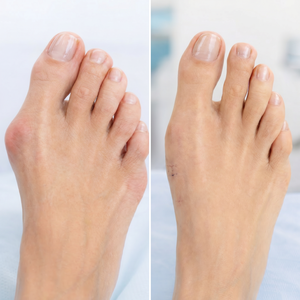
If you have been told you may need foot surgery, one of the first questions to ask is whether your condition can be treated with a minimally invasive approach. Minimally invasive foot surgery, often called MIS, uses very small incisions and specialized instruments to treat selected foot and ankle problems.
At Orange County Foot & Ankle Institute, we believe patients should understand not only what procedure is being recommended, but also how it will be performed. The surgical approach can affect recovery, swelling, scarring, comfort, and return to activity. While minimally invasive foot surgery can be an excellent option for the right patient, it is not automatically the best choice for
every condition. Proper evaluation and patient selection matter.
What is minimally invasive foot surgery?
Minimally invasive foot surgery is a technique that allows the surgeon to correct certain foot problems through small incisions rather than larger traditional open incisions. The surgeon uses specialized tools and imaging guidance to perform the correction while minimizing soft-tissue disruption. For patients, that difference matters. Smaller incisions may mean a procedure that looks less aggressive externally, but the real advantage is not cosmetic alone. The goal is to reduce unnecessary tissue trauma while still achieving a stable, effective correction.
What conditions can sometimes be treated this way?
Minimally invasive techniques are commonly discussed for conditions such as bunions, hammertoes, and other structural forefoot problems, depending on the patient’s anatomy and the surgeon’s training. That said, not every foot problem can or should be treated through a minimally invasive approach. Some deformities are too severe, some cases are too complex, and some patients may need a different technique to get the safest and most durable result.
Why patients are interested in minimally invasive surgery
Many patients ask about minimally invasive foot surgery because they are thinking about more than just the diagnosis. They are also thinking about incision size, pain after surgery, swelling, scarring, time away from work, and return to walking and shoes. These potential advantages are one reason minimally invasive surgery has become an important area of education and training in foot and ankle surgery.
Is minimally invasive surgery always better?
No. This is where patients need honest, balanced information.
Minimally invasive surgery can be highly effective in selected cases, but smaller incision does not automatically mean better surgery. The best surgical method depends on the specific diagnosis, the severity of the deformity, bone quality, soft-tissue condition, overall health, and the goals of treatment.
The right question is not: Is minimally invasive surgery newer?
The better question is: Is minimally invasive surgery appropriate for my specific condition?
What should patients ask before surgery?
Before moving forward, ask your surgeon:
- Am I a candidate for minimally invasive foot surgery?
- Why is this approach right for my condition?
- If not MIS, why not?
- What are the risks and benefits of both approaches?
- What will recovery actually look like?
- How soon can I walk, return to shoes, or resume work?
These questions help patients make informed decisions and better understand whether the plan is based on their condition rather than routine habit. A well-trained foot and ankle surgeon should be able to explain both the potential benefits and the limitations clearly.
What recovery may look like
Recovery varies depending on the procedure performed, the location of the problem, and whether bone work, soft-tissue correction, or fixation is involved. Some patients assume that minimally invasive means instant recovery, but that is not accurate. Even with smaller incisions, surgery still requires healing time, activity modification, and close follow-up. The benefit is that in appropriate cases, the recovery experience may be easier than with a more extensive open approach. Minimally invasive foot surgery can be an excellent option for the right patient. It may offer smaller incisions, less soft-tissue disruption, and a smoother recovery experience in selected cases. But the best outcome comes from choosing the right procedure for the right condition, not just the trendiest label.
At Orange County Foot & Ankle Institute, we believe patients deserve a clear explanation of all appropriate treatment options, including whether a minimally invasive approach may be the right fit. If you are dealing with bunions, hammertoes, chronic foot pain, or another structural foot problem, a proper evaluation can help determine the safest and most effective path forward.