
What Patients Should Know
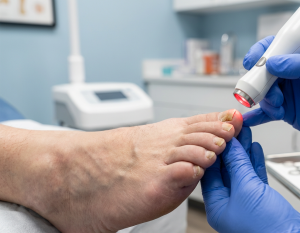
Fungal toenails, also called onychomycosis, are a common condition that can cause nails to become yellow, white, or brown, thickened, brittle, misshapen, and sometimes difficult to trim. While many people think of fungal nails as only a cosmetic issue, the condition can also lead to discomfort, nail damage, and ongoing frustration if it is not properly evaluated and
treated.
At Orange County Foot & Ankle Institute, we evaluate fungal nails carefully and create treatment plans based on the severity of the infection, the condition of the nail, your medical history, and your treatment goals. In some cases, conservative care may be enough. In others, more advanced treatment options, including laser therapy, may be recommended as part of a
broader plan.
What Causes Fungal Toenails?
Fungal nail infections usually develop when fungus enters the nail through tiny cracks in the nail
or surrounding skin. The risk can be higher in people who have athlete’s foot, sweaty feet, repeated shoe pressure, nail trauma, older age, circulation issues, or certain medical conditions. Once the infection settles under the nail, it can be difficult to treat because the nail plate creates a barrier that limits how well some treatments reach the source of the problem.
Why Professional Evaluation Matters
Not every thick or discolored nail is caused by fungus. Trauma, psoriasis, nail dystrophy, and other conditions can look very similar. That is why a professional foot and ankle evaluation is important before starting treatment. Early diagnosis also improves the chance of managing the problem before the nail becomes more deformed, painful, or resistant to treatment.
Treatment Options for Fungal Nails
Treatment may include topical medication, oral antifungal medication, nail trimming, debridement, or procedural care, depending on the case. Oral antifungal medication is often considered one of the more effective medical treatment options, but it is not right for everyone and may require monitoring because of possible side effects and medication interactions. Topical treatment can help in some cases, but it often requires long-term consistency and may work best in milder infections or as part of combination care.
Where Class IV Laser Therapy Fits In
Class IV laser therapy is often discussed as a non-invasive, in-office option for fungal toenails. The goal is to direct laser energy through the nail to target the infected tissue below. Many patients are interested in laser treatment because it avoids the daily routine of long-term topical medication and may be an option for those who are not ideal candidates for oral antifungal drugs. Evidence on laser treatment is still evolving, and outcomes can vary depending on the type of laser used, the severity of the infection, and whether laser is combined with other therapies.
Important Expectations About Laser Treatment
Laser treatment is not an instant cosmetic fix. Even when treatment is successful, the damaged nail does not suddenly turn clear. Instead, improvement happens gradually as a healthier nail grows in over time. Toenails grow slowly, so visible improvement can take months, and full regrowth may take up to 12 to 18 months depending on the nail and the extent of infection. Repeat infection is also possible, which is why prevention remains an important part of care.
Is Laser Treatment FDA-Approved for Nail Fungus?
This is an area where patients should receive clear information. According to the American Academy of Dermatology, lasers are not FDA-approved to treat nail fungus itself; the FDA has approved laser use to improve the appearance of the nail after the fungal infection has cleared. That does not mean laser has no role in care, but it does mean patients should understand the distinction and have realistic expectations before treatment.
How to Help Prevent Fungal Nails From Coming Back
Successful treatment does not end when the office visit is over. Prevention matters. Keeping feet clean and dry, changing socks regularly, wearing breathable shoes, disinfecting nail tools, avoiding walking barefoot in public wet areas, and treating athlete’s foot promptly can help reduce recurrence.
When to Schedule an Evaluation
You should schedule an appointment if your toenails are becoming discolored, thick, crumbly, painful, hard to trim, or increasingly misshapen. The sooner a fungal nail problem is evaluated, the more treatment options are typically available. At Orange County Foot & Ankle
Institute, we can examine the nail, discuss whether laser therapy is appropriate, and recommend
the treatment approach that best matches your condition and goals.
Schedule a Fungal Toenail Evaluation
If you are concerned about fungal toenails or want to learn whether laser treatment may be right
for you, contact our office to schedule a foot and ankle evaluation. Phone: (714) 547-7100