
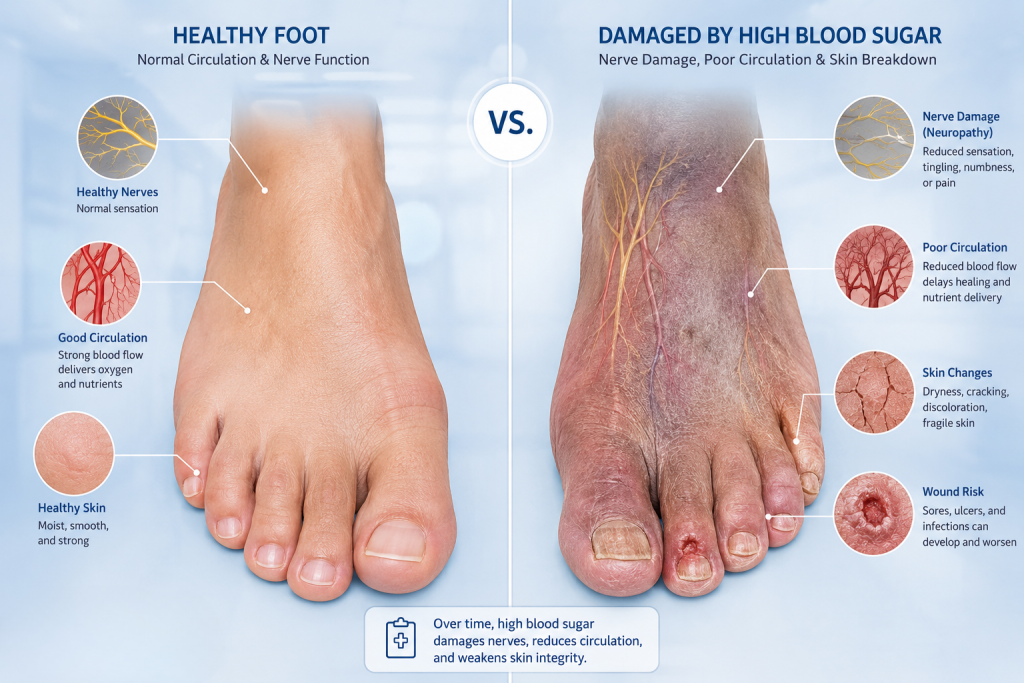
High blood sugar can affect the feet slowly and silently. Many patients do not notice a problem at first because the damage often develops over time. However, when blood sugar stays high for long periods, it can harm the nerves, blood vessels, skin, and healing ability of the feet.
For people with diabetes, this matters because even a small cut, blister, callus, or pressure spot can become more serious if the foot cannot feel pain well or heal properly.
At Orange County Foot & Ankle Institute, we want patients to understand that diabetic foot problems often start before there is an obvious wound. Early evaluation, daily foot checks, and proper foot care can help reduce the risk of complications.
High Blood Sugar Can Damage the Nerves
One of the most common ways diabetes affects the feet is through nerve damage, also called diabetic neuropathy. High blood sugar can injure the nerves that help the feet feel pain, pressure, temperature, and injury.
When these nerves do not work properly, the feet may feel numb, tingling, burning, or unusually sensitive. In some cases, patients may lose protective sensation. This means they may not feel a blister, cut, burn, or sore until it becomes worse.
Poor Circulation Can Slow Healing
The feet need healthy blood flow to repair tissue. Blood carries oxygen, nutrients, and immune support to the skin, muscles, and wound areas.
Over time, diabetes can affect the blood vessels in the legs and feet. When circulation becomes reduced, the body may have a harder time healing small injuries. A minor cut may close slowly, reopen, or become infected.
Small Injuries Can Become Serious
When nerve damage and poor circulation happen together, the risk becomes higher. A patient may not feel a small injury, and the body may not heal it well.
This can allow a blister, callus, crack, or pressure sore to worsen. In diabetic feet, small wounds can become ulcers if pressure, infection, or poor blood flow continues.
That is why patients with diabetes should not ignore skin changes, redness, swelling, drainage, dark discoloration, or wounds that do not improve.
High Blood Sugar Can Weaken the Body’s Defense Against Infection
High blood sugar can make it harder for the body to fight infection. When bacteria enter a wound, the immune system may not respond as strongly as it should.
This can allow infection to spread deeper into the skin and soft tissue. In serious cases, infection may involve deeper structures and require urgent medical care.
A foot wound with redness, warmth, swelling, odor, drainage, increasing pain, or dark skin changes should be checked as soon as possible
Skin and Nail Problems May Become More Common
Diabetes can also affect the skin and toenails. The skin may become dry, cracked, or more fragile. Cracks in the skin can create openings where bacteria may enter.
Toenail problems, fungal nails, ingrown nails, thick nails, and pressure from shoes can also increase the risk of irritation or wounds. These problems may seem small, but they can become more serious when sensation and healing are reduced.
Pressure Can Cause Hidden Damage
Repeated pressure is another major problem in diabetic feet. A tight shoe, abnormal walking pattern, bunion, hammertoe, callus, or high-pressure area can injure the skin over time.
If the patient cannot feel the pressure clearly, the damage may continue day after day. A callus can hide deeper tissue irritation underneath. Without treatment, that pressure area may break down and form an ulcer.
Why Daily Foot Checks Matter
Daily foot checks are one of the simplest ways to catch problems early. Patients with diabetes should look for cuts, blisters, redness, swelling, drainage, cracks, dark spots, calluses, and nail changes.
Patients should also contact a doctor right away for problems such as numbness, ulcers, or cuts that have not healed. Blood sugar control, blood pressure control, and cholesterol management also play an important role in protecting foot health.
When to See a Podiatrist
You should schedule a foot evaluation if you have diabetes and notice:
- Numbness, tingling, or burning
- A cut, blister, sore, or wound
- A wound that is not healing
- Redness, warmth, swelling, or drainage
- Dark or black skin changes
- Thick calluses or pressure spots
- Ingrown or infected toenails
- Changes in foot shape
- Pain with walking or standing
The Bottom Line
High blood sugar can damage the feet over time by affecting nerves, circulation, skin, nails, and healing ability. The damage may begin quietly, but the complications can become serious if early warning signs are missed.
At Orange County Foot & Ankle Institute, we evaluate diabetic foot problems carefully and help patients reduce the risk of wounds, infections, ulcers, and long-term complications. If you have diabetes and notice any change in your feet, do not wait. Early care can help protect your feet and your mobility.