
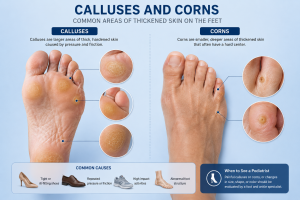
Calluses and corns may seem like small foot problems, but they can become more serious for patients with diabetes. Thickened skin often develops from repeated pressure, friction, or rubbing inside the shoe.
For many people, a corn or callus may only cause mild discomfort. For diabetic patients, it can be a warning sign that too much pressure is building in one area of the foot.
What Are Calluses and Corns?
Calluses are thickened areas of skin that usually develop from repeated pressure or friction. They often appear on the bottom of the foot, especially under areas that carry body weight.
Corns are smaller, more focused areas of thickened skin. They often form on the tops or sides of the toes, between the toes, or over bony areas where shoes rub.
Both conditions can develop when shoes are too tight, toes rub together, foot structure changes, or walking pressure is not evenly distributed.
Why Diabetes Makes Them More Risky
Diabetes can affect the nerves and blood vessels in the feet. When nerve damage develops, a patient may not feel pain from pressure, rubbing, or skin breakdown. When circulation is reduced, the skin may also heal more slowly.
This combination can make a simple callus or corn more dangerous. A pressure spot may continue to worsen without the patient noticing it.
For diabetic patients, a callus is not just thick skin. It may be a sign that the tissue underneath is under repeated stress.
A Callus Can Hide Deeper Damage
A callus may look like a dry, thick patch of skin, but it can sometimes hide deeper irritation underneath. When pressure continues, the tissue below the callus may become damaged.
In some diabetic patients, this can lead to skin breakdown or a foot ulcer. This is especially concerning when the callus forms on the bottom of the foot, where walking adds repeated pressure.
That is why trimming, shaving, or cutting a callus at home can be risky. Cutting too deeply can create a wound, and even a small wound may become difficult to heal.
Do Not Use Harsh Corn Removers Without Medical Advice
Many over-the-counter corn removers contain medicated acids. These products can damage healthy skin if they are used incorrectly.
For patients with diabetes, nerve damage, or poor circulation, this can lead to burns, wounds, infection, or delayed healing.
Diabetic patients should not try to aggressively remove corns or calluses at home. A podiatrist can reduce thickened skin safely and check for hidden wounds or pressure problems.
Warning Signs to Watch For
A corn or callus should be checked if you notice:
- Pain or tenderness
- Redness or swelling
- Drainage or odor
- Skin cracking or bleeding
- Dark discoloration
- A sore under or near the callus
- Increasing thickness
- Difficulty walking
- Numbness, diabetes, or poor circulation
These signs may mean the skin is under too much pressure or that a wound is starting to form.
What Actually Helps?
Treatment should focus on the cause of the pressure, not only the thickened skin. Dr. Amir Lebaschi, DPM may carefully reduce the corn or callus, check for hidden wounds, evaluate circulation, and look for pressure points.
Care may also include shoe changes, padding, custom orthotics, diabetic shoes, toe spacers, wound care, or treatment for toe deformities such as hammertoes or bunions.
The goal is to reduce pressure safely, protect the skin, and prevent the problem from turning into a wound.
The Bottom Line
Calluses and corns are common, but diabetic patients should take them seriously. Thickened skin can be a sign of repeated pressure, and repeated pressure can lead to skin breakdown.
If you have diabetes, numbness, poor circulation, or a corn or callus that keeps coming back, do not try to cut or treat it aggressively at home.
At Orange County Foot & Ankle Institute, Dr. Amir Lebaschi, DPM evaluates calluses and corns carefully to protect the skin, reduce pressure, and help prevent diabetic foot complications. Early care can help protect your feet and lower the risk of wounds.